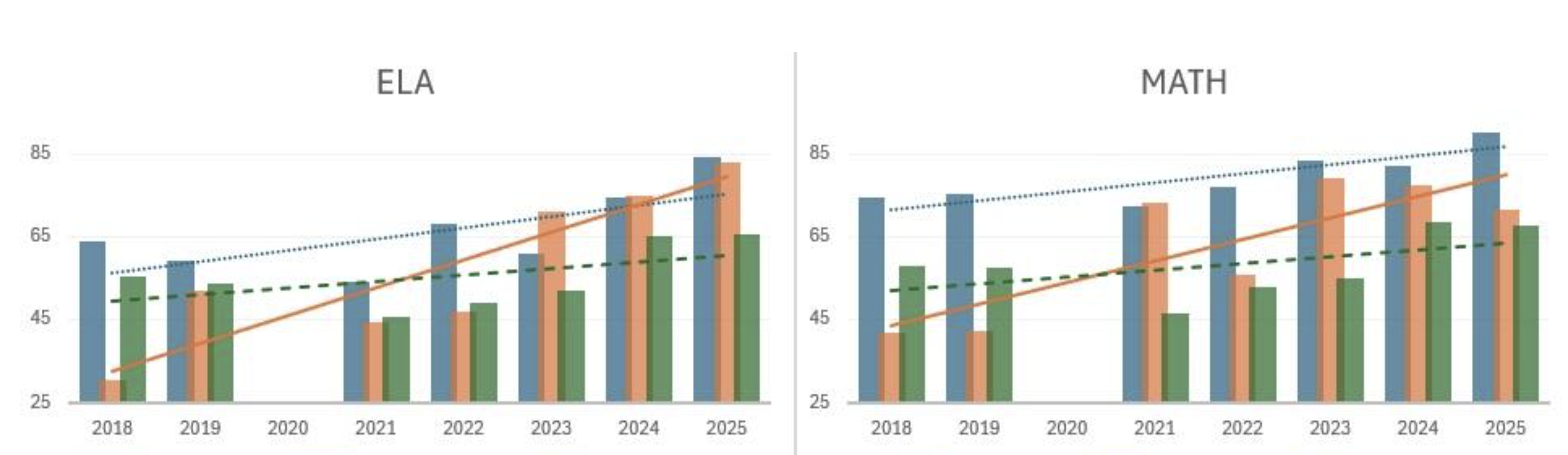
A Rural School's Focus on Culture Helps It Defy Achievement OddsBy Aaron Hilts, Principal, Sevastopol School District Sevastopol Elementary School, with its 35% economically disadvantaged (ED) enrollment, has defied the odds with high achievement scores and closing gaps. In 2025, it earned rankings in the top 10% or higher from outlets such as U.S. News & World Report and SchoolDigger.com. But, in 2018 when staff reviewed the state assessment data a concerning gap was identified: the ED student population was trailing their general education (GE) peers by approximately 20 points in both the core areas of English/Language Arts (ELA) and math. A team effort was made to close that gap. The school recognized that while meeting basic needs—such as providing free breakfast, a donation closet, and food drives—was essential, it was not enough. A staff study using Poor Students, Rich Teaching by Eric Jensen and some related research, made it apparent that deeper cultural shifts were necessary for ED students to catch up academically. Sevastopol implemented the tenets of Positive Behavioral Interventions and Supports (PBIS), along with programs such as Character Strong and the Zones of Regulation. By explicitly teaching expectations, rules, and shared language from the ground up, the school created a common foundation that gave all students equal footing, regardless of background or prior experience. Staff also moved from sympathy to empathy after participating in a realistic poverty simulation. This experience reinforced the understanding that many ED students are impacted by trauma and that recovery requires opportunities to contribute meaningfully to society. In response, Sevastopol created a Community of Caring, with each grade focusing on a specific service area — such as environmental stewardship, supporting the elderly, or learning about community helpers. Through projects tied to these themes, students experienced the power of making a real-world impact. For example, fifth graders launched a milk carton recycling program. The 2nd graders work on making improvements to the school’s eco-lab. By giving students meaningful work, it has fostered a sense of value and importance. Beyond service learning, Sevastopol intentionally built a culture of belonging. Partnerships with generous local businesses made it possible for every student to receive a free Sevastopol school spirit shirt. Providing spirit wear free of charge to all students eliminated stigma and allowed ED students to feel included in a way that might not otherwise have been possible. All students proudly wear their Pioneer shirts, often passing them down to younger siblings in later years. As this culture took hold, student achievement rose. Scores increased in both ELA and math, suggesting that the gains were driven not by curriculum changes, but by cultural transformation, as described in a Wisconsin Public Radio article in January 2026.
While the state’s GE population improved by approximately 10 points since 2018, Sevastopol’s ED students ultimately surpassed the state’s GE averages. A phrase often heard at Sevastopol is, “Pioneers take care of one another.” By focusing first on the needs of some, Sevastopol created a culture that benefits all.
|